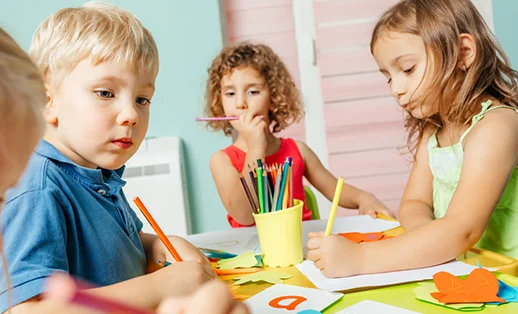
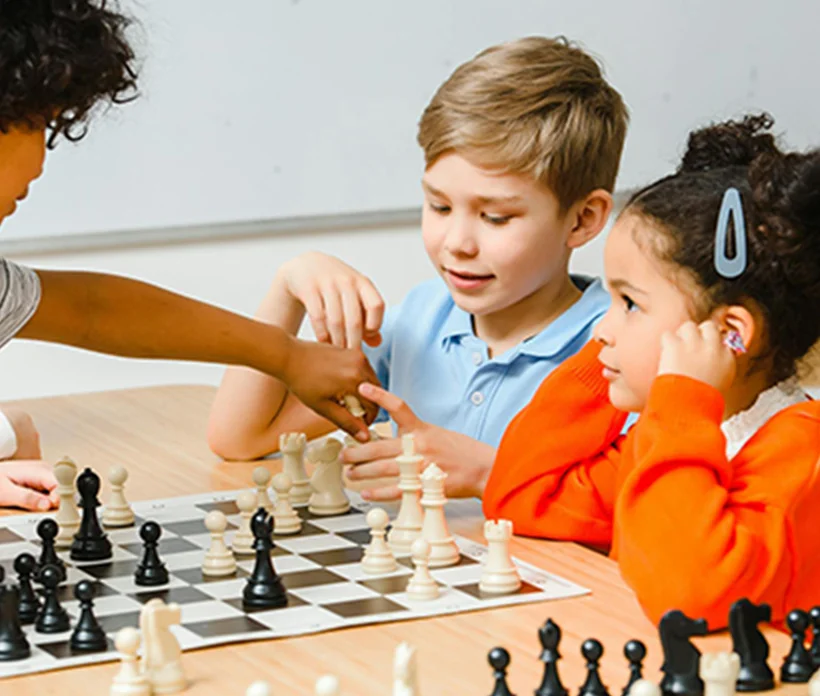
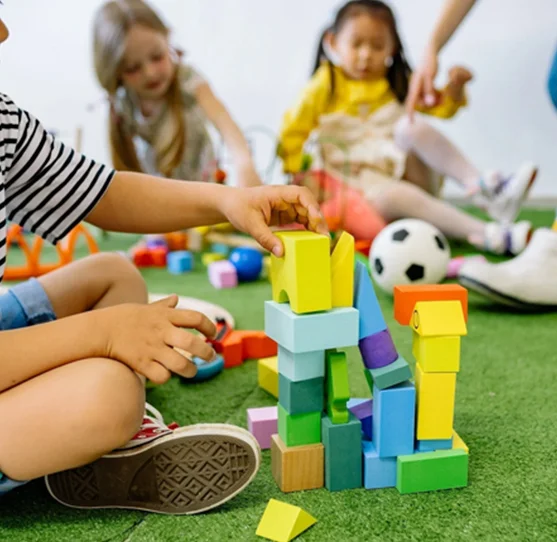
Our program is inspired by the British Columbia Early Learning Framework and provides a play-based, child-centred learning environment where children develop confidence, independence, social skills, communication, creativity, and early literacy foundations. Through exploration, discovery, and meaningful relationships, we support each child’s unique learning journey while fostering a lifelong love of learning.
Instructional activities are organized into three ways of learning:
General group activities – circle and story time experiences
Small group activities – directed activities that build knowledge and early learning skills List Item #1
Learning centers – intentional play, social interactions, child-initiated learning opportunities, exploration, and skill generalization List Item #1
Our curriculum is also inspired by the Reggio Emilia philosophy and Early Start Denver Model (ESDM) Group Program. Through play, exploration, and meaningful relationships, children develop confidence, creativity, communication skills, and school readiness
Reggio Emilia Philosophy
The Reggio Emilia philosophy views children as capable, curious, and competent learners. Rather than following a fixed set of lessons, educators observe children's interests and build learning experiences around their questions, ideas, and discoveries.
In a Reggio-inspired classroom, children are encouraged to:
Explore and investigate topics that interest them.
Express their ideas through art, movement, language, music, and play.
Collaborate with peers and develop problem-solving skills.
Learn through hands-on experiences and meaningful projects.
Teachers act as guides and co-learners, supporting children's natural curiosity while creating opportunities for deeper exploration and learning.
Reggio Emilia Philosophy
The Reggio Emilia philosophy views children as capable, curious, and competent learners. Rather than following a fixed set of lessons, educators observe children's interests and build learning experiences around their questions, ideas, and discoveries.
In a Reggio-inspired classroom, children are encouraged to:
Explore and investigate topics that interest them.
Express their ideas through art, movement, language, music, and play. List Item #1
Collaborate with peers and develop problem-solving skills. List Item #1
Learn through hands-on experiences and meaningful projects. List Item #1
Teachers act as guides and co-learners, supporting children's natural curiosity while creating opportunities for deeper exploration and learning.
Early Start Denver Model (ESDM) Group Program
At Symbiosis KIDS Center, our Early Start Denver Model (ESDM) Group Program is designed to support young children with autism and related developmental differences through a play-based, relationship-focused, and evidence-based approach.
The program combines the principles of developmental learning strategies in a natural and engaging preschool-style environment. Our goal is to help children build meaningful communication, social interaction, emotional regulation, independence, and learning skills while feeling safe, connected, and motivated.
What is the Early Start Denver Model (ESDM)?
The Early Start Denver Model is an internationally recognized early intervention approach developed for young children, typically between 12 months and 5 years of age, who demonstrate autism-related social communication differences or developmental delays.
ESDM focuses on learning through:
Play and shared activities
Positive relationships List Item #1
Everyday routines List Item #1
Child-led interactions List Item #1
Natural opportunities for communication and social growth List Item #1
Children learn best when they are emotionally engaged and having fun. ESDM therapists use play, imitation, movement, songs, sensory experiences, and interactive routines to encourage learning in a joyful and meaningful way.
Our Group-Based ESDM Approach
The Symbiosis KIDS Center ESDM Group Program provides children with opportunities to learn alongside peers in a supportive and structured setting. Small group experiences help children practice social communication and participation skills in real-life interactions.
Group activities may include:
Circle time
Pretend play List Item #1
Sensory play List Item #1
Music and movement List Item #1
Snack and self-help routines List Item #1
Fine motor activities List Item #1
Outdoor and gross motor play List Item #1
Social games and peer interaction List Item #1
Our educators carefully adapt activities based on each child’s developmental level, communication style, sensory profile, and interests.
Key Areas of Development
The ESDM Group Program supports growth in:
Social communication
Joint attention and engagement List Item #1
Play and imitation skills List Item #1
Fine and gross motor development List Item #1
Peer interaction and friendship building List Item #1
Language and early speech development
Emotional regulation List Item #1
Cognitive and learning readiness List Item #1
Adaptive and self-help skills List Item #1
Early Start Denver Model (ESDM) Group Program
At Symbiosis KIDS Center, our Early Start Denver Model (ESDM) Group Program is designed to support young children with autism and related developmental differences through a play-based, relationship-focused, and evidence-based approach.
The program combines the principles of developmental learning strategies in a natural and engaging preschool-style environment. Our goal is to help children build meaningful communication, social interaction, emotional regulation, independence, and learning skills while feeling safe, connected, and motivated.
What is the Early Start Denver Model (ESDM)?
The Early Start Denver Model is an internationally recognized early intervention approach developed for young children, typically between 12 months and 5 years of age, who demonstrate autism-related social communication differences or developmental delays.
ESDM focuses on learning through:
Play and shared activities
Positive relationships
Everyday routines
Child-led interactions
Natural opportunities for communication and social growth
Children learn best when they are emotionally engaged and having fun. ESDM therapists use play, imitation, movement, songs, sensory experiences, and interactive routines to encourage learning in a joyful and meaningful way.
Our Group-Based ESDM Approach
The Symbiosis KIDS Center ESDM Group Program provides children with opportunities to learn alongside peers in a supportive and structured setting. Small group experiences help children practice social communication and participation skills in real-life interactions.
Group activities may include:
Circle time
Pretend play
Sensory play
Music and movement
Snack and self-help routines
Fine motor activities
Outdoor and gross motor play
Social games and peer interaction
Our educators carefully adapt activities based on each child’s developmental level, communication style, sensory profile, and interests.
Key Areas of Development
The ESDM Group Program supports growth in:
Social communication
Joint attention and engagement
Play and imitation skills
Fine and gross motor development
Peer interaction and friendship building
Language and early speech development
Emotional regulation
Cognitive and learning readiness
Adaptive and self-help skills
Features of our Curriculum
Family-Centered Philosophy
Families are an essential part of the process. We value collaboration and work closely with caregivers to support consistency between home, therapy, and community environments.
Parents and caregivers may receive:
● Regular progress updates
● Home strategy suggestions
● Collaborative goal planning
● Guidance for supporting communication and play at home
● Opportunities for parent consultation and coaching
We believe that children make the greatest progress when families and professionals work together in a supportive partnership.
Inclusive and Neurodiversity
-Affirming Environment
Symbiosis KIDS Center embraces neurodiversity and recognizes that every child learns differently. Our ESDM group setting is designed to be:
● Warm and welcoming
● Structured yet flexible
● Sensory-considerate
● Play-based and engaging
● Safe and emotionally supportive
Visual supports, predictable routines, sensory regulation strategies, and individualized supports are incorporated throughout the program to help children feel successful and secure.
Individualized Educational
support
At Symbiosis KIDS Center, we believe every child deserves individualized support to help them learn, grow, and succeed. As part of our transdisciplinary approach, we incorporate educational therapy to support children with diverse learning needs through evidence-based and child-centered interventions.
Through a holistic and collaborative model, we provide individualized interventions for areas such as reading, writing, math, executive functioning, attention, study skills, and social-emotional learning. Using multisensory teaching methods, play-based learning, and ongoing progress monitoring, we ensure that each child receives the support they need in a meaningful and engaging way.